The Ultimate Hampi Travel Guide | Time Travel to India's Golden Era
TravelTalk24 Team
Travel Experts
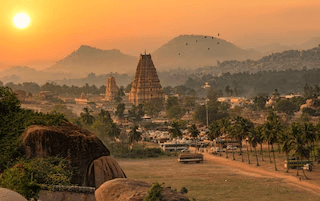
Planning a trip to a place that feels out of this world? Step into Hampi, a UNESCO World Heritage site in Karnataka that transports you straight back to the 14th century. Once the thriving capital of the powerful Vijayanagara Empire, Hampi was known as the second-largest city in the world after Beijing!
Situated on the banks of the Tungabhadra River, Hampi is home to over 1,600 monuments, stunning Dravidian architecture, and fascinating mythological roots associated with the epic Ramayana. The town is beautifully divided into two parts by the river: the majestic southern monuments and the mythological northern side, known as Kishkindha.
Located just 300 km from Bengaluru, Hampi makes for a perfect scenic road trip. Whether you're a history buff, a spiritual seeker, or someone looking to marvel at incredible monolithic sculptures, we've mapped out everything you need to experience in this ancient city.
Why you must visit this town in INDIA! Hampi
Ideal 2-Day Hampi Itinerary
This itinerary balances Hampi's grandest temples, ancient global markets, and breathtaking sunset viewpoints.
| Day | Activities & Sightseeing | Notes |
|---|---|---|
| Day 1 | Virupaksha Temple, Local Markets & Monoliths | Soak in the vibe by the Tungabhadra river. Visit the ancient Hampi Bazaar and the giant Monolithic Ganesha. In the evening, explore the magnificent Virupaksha Temple to catch the beautiful lighting and daily aarti rituals. |
| Day 2 | Vittala Temple, Royal Enclosure & Sunsets | Marvel at the Krishna Temple and Lakshmi Narasimha Statue. Visit the Vittala Temple (home to the iconic Stone Chariot), Queen's Bath, Lotus Mahal, and Mahanavami Dibba. End the day with a trek up Matanga Hill for a panoramic sunset view. |
Top Sights & Experiences in Hampi
Hampi is packed with architectural wonders and historical marvels that celebrate India's golden era. Don't miss these iconic spots.
| Location | Highlights | Details |
|---|---|---|
| Virupaksha Temple | 165ft Gopura & Daily Rituals | Dedicated to Lord Shiva (Virupaksheshwara) and Goddess Parvati (Pampa Devi). Features a massive 165-foot Dravidian style Gopura. It's the primary temple in Hampi where daily rituals and pujas are still performed. |
| Vittala Temple | Stone Chariot & Musical Pillars | Famous for the iconic Stone Chariot printed on the Indian ₹50 note. The temple also features incredible stone pillars that historically produced musical notes matching classical ragas. |
| Mahanavami Dibba | Grand Royal Platform | A massive stone platform built by King Krishnadevaraya after winning Udayagiri. Used by the king to watch grand processions during the Navaratri festival. It features fascinating secret chambers beneath. |
| Lakshmi Narasimha Statue | Largest Monolithic Statue | Hampi's biggest monolithic statue carved out of a single rock. Though partly damaged by invaders, it remains a breathtaking sight. |
| Matanga Hill | Panoramic Views & Ram Temple | The perfect spot for sunset. It houses a Ram Temple where 24/7 bhajans have been playing non-stop for centuries. Offers a sweeping view of the entire ruined city. |
The History & Mythological Connection
Hampi's mythological history is incredibly strong. It is believed to be the ancient monkey kingdom of Kishkindha from the Ramayana. The northern part of Hampi, across the Tungabhadra River, is home to Anjanadri Hill—the celebrated birthplace of Lord Hanuman.
Historically, the city was a thriving global trade hub where merchants from around the world came to buy and sell spices, horses, silk, and jewelry at the famous Hampi Bazaar. Unfortunately, the glorious city was brought to ruins after the Battle of Talikota in 1565 by the Deccan Sultanates, leaving behind the stunning remnants we see today.
Travel Tips & Local Shopping
Make the most out of your historic getaway with these essential tips.
Best Time to Visit
The weather in Hampi can be quite hot during summers. The best time to visit is between October and February when the weather is pleasant for exploring the outdoor ruins.
Local Souvenirs
- Banana Stem Artifacts — Unique local handicrafts made by local women artisans.
- Stone Carvings — Miniature stone chariots and deities.
- Lambani Embroidery — Colorful textiles and bags made by the local Banjara community.
“Walking through Hampi isn't just sightseeing; it's a feeling of stepping back into the golden era of India's most powerful empire.”
— Krishna & Mukesh
Simplify Your Hampi Heritage Trail
Mapping out the 1,600+ monuments in Hampi and timing your sunset treks perfectly can be overwhelming. To plan your routes and itineraries effortlessly, check out the travel planning app, TravelTalk24.
 Download on iOS
 Get it on Android
Tags